
When Philadelphia Zoning Requires More Than a Standard Permit
A special exception in Philadelphia zoning law is a use that the Zoning Code contemplates as potentially appropriate in a given district, but requires approval from the Zoning Board of Adjustment (ZBA) before proceeding. Unlike permitted by-right uses, a special exception triggers additional review to confirm the project will not cause detrimental impacts beyond those normally expected from the proposed use. For developers, investors, and commercial property owners navigating Philadelphia’s entitlement process, understanding special exceptions is critical to protecting deal timelines and avoiding costly delays. Special exception uses are identified by an "S" in the use tables of §14-602 of the Philadelphia Zoning Code, and the ZBA grants them only after confirming compatibility with surrounding properties.
If you are pursuing a development project that may require a special exception or another zoning approval, RS Law Group can help you evaluate risk and build an effective strategy. Call (215)-717-2200 or reach out to our team to discuss your project.
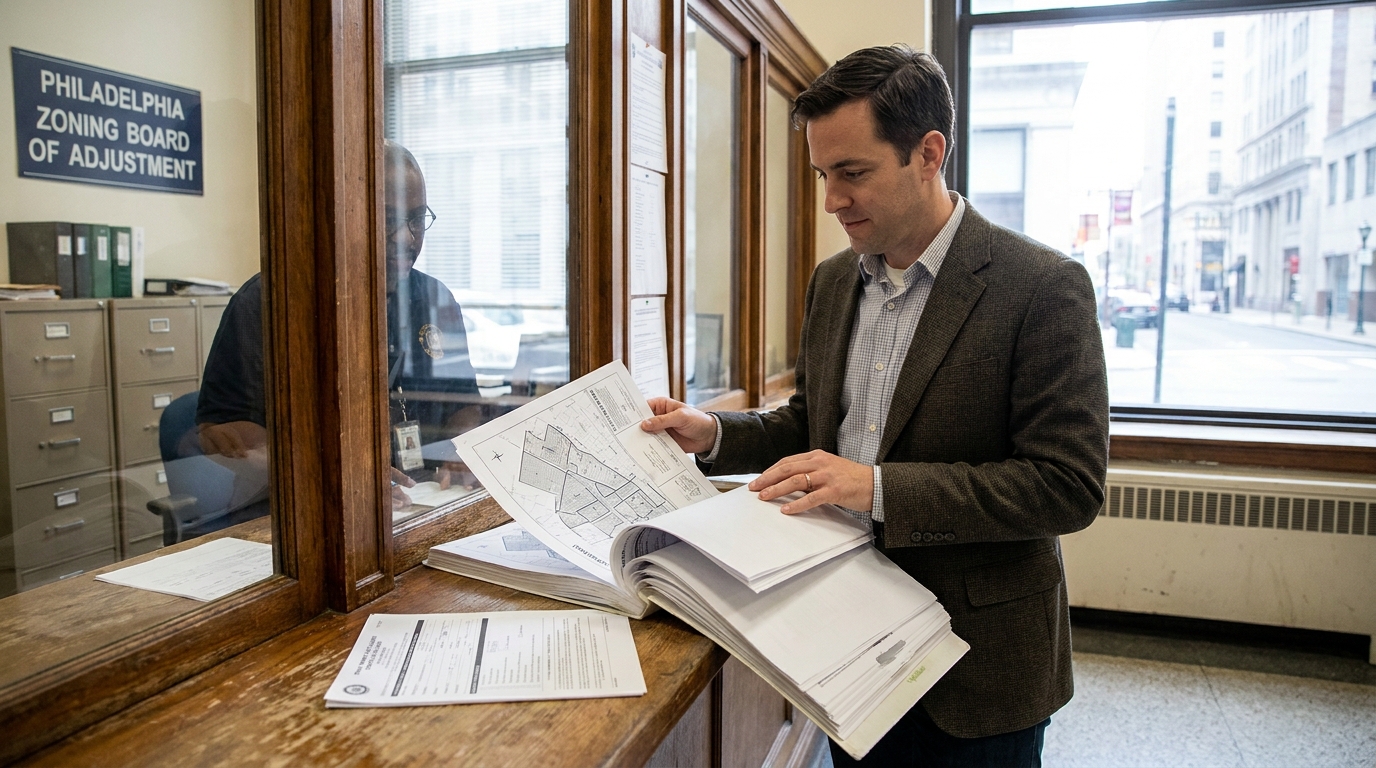
How a Special Exception Differs From a Variance in Philadelphia Zoning Law
The distinction between a special exception and a variance is one of the most consequential in Philadelphia zoning practice. A special exception applies to a use already designated in the Zoning Code as eligible for approval in a particular district, provided the applicant demonstrates that criteria in §14-303(7)(e) are satisfied. A variance provides relief from strict code application when proposed dimensions or use do not conform, and the applicant must demonstrate unnecessary hardship under §14-303(8). For deeper analysis of variance requirements, see our guide on variances in Philadelphia.
The procedural distinction matters as well. For special exceptions, Philadelphia Licenses and Inspections (L&I) reviews the application and issues a "referral" for ZBA filing. For variances, L&I issues a "refusal," which forms the basis for ZBA appeal. In either case, applicants must file within 30 days of L&I’s action. This procedural difference can affect how you frame your application and what evidence you present at the hearing.
| Feature | Special Exception | Variance |
|---|---|---|
| Legal basis | Use designated with "S" in code, subject to criteria in §14-303(7)(e) | Relief from strict code application due to unnecessary hardship under §14-303(8) |
| L&I action | Issues a "referral" | Issues a "refusal" |
| Applicant burden | Show the use meets its code definition, satisfies all dimensional and use-specific standards, and will not cause detrimental impacts beyond those normally expected | Demonstrate unnecessary hardship and that the variance will not be detrimental to the public welfare |
| Code designation | Marked with "S" in §14-602 use tables | No pre-authorization in use tables |
💡 Pro Tip: Before filing any application, confirm whether your proposed use is marked with an "S" in the §14-602 use tables. Misidentifying your approval pathway can delay your project by weeks or months.
The ZBA Hearing Process for a Zoning Attorney Philadelphia Clients Should Understand
The ZBA evaluates special exception applications using criteria specified in §14-303(7)(e) of the Philadelphia Zoning Code. The applicant must demonstrate that the proposed use meets the code’s definition, satisfies all dimensional standards, and complies with applicable use-specific standards in §14-603. The applicant must also show the proposed use will not cause specific detrimental impacts beyond those normally expected, including traffic, noise, environmental effects, and compatibility with adjacent properties. If the applicant meets this burden, objectors may present contrary evidence. The ZBA holds a public hearing where the applicant presents evidence and community members may testify.
Preparation for the hearing is where strategic legal counsel provides the greatest value. A well-prepared application anticipates potential objections, presents credible evidence of neighborhood compatibility, and addresses each criterion in §14-303(7)(e) systematically.
Beyond Use Approvals: Signage, Parking, and Other Special Exceptions
The Philadelphia Zoning Code may also require special exception approval for aspects of a development beyond the primary use. Signage, parking configurations, and other site-specific elements can trigger their own special exception requirements. For commercial projects, even when the principal use is permitted by right, ancillary features may still require ZBA approval.
💡 Pro Tip: When conducting due diligence, review whether signage, parking, or other project components trigger additional ZBA approvals. Overlooking these requirements is a common source of timeline disruption.
Why Philadelphia Operates Under Its Own Zoning Framework
The Pennsylvania Municipalities Planning Code (MPC) provides a uniform framework for planning and land use across the commonwealth, but it explicitly does not apply to Philadelphia. Philadelphia operates under its own zoning code, adopted pursuant to the Philadelphia Home Rule Charter, with its own administrative bodies and standards of review. This distinction is critical for developers active in multiple Pennsylvania markets. Procedures and standards that apply in surrounding counties do not necessarily apply within city limits.
Under the MPC, zoning hearing boards handle special exceptions for other municipalities. The Pennsylvania DCED’s planning series on special exceptions provides an overview of the MPC framework. However, Philadelphia’s zoning administration is handled by L&I and the ZBA under the city’s own code.
💡 Pro Tip: If you are developing properties in both Philadelphia and surrounding counties, do not assume the same legal standards or procedural steps apply. Engage counsel with direct experience in the specific jurisdiction where your project is located.
Practical Example: Urban Agriculture and Special Exceptions in Philadelphia
Philadelphia’s Zoning Code recognizes four types of urban agriculture, each with different zoning allowances, and several require special exception approval in certain districts. These categories include Community Gardens, Market or Community-Supported Farms, Horticulture Nurseries and Greenhouses, and Animal Husbandry. While community gardens are permitted by right in most residential, commercial, and mixed-use categories, market or community-supported farms face more restrictions.
A Market or Community-Supported Farm requires a special exception in RSD (Residential Single-Family Detached) districts, while it is permitted by right in most other residential districts. This illustrates a broader principle: certain land uses are neither outright permitted nor prohibited but instead require an applicant to demonstrate compatibility through the special exception process. For investors exploring urban agriculture opportunities or adaptive reuse projects, early identification of these requirements is essential.
What This Means for Commercial Development
The urban agriculture example is instructive beyond farming. Across many use categories, a proposed commercial use may be conditionally allowed through the special exception mechanism. Developers should review use tables early to determine whether a special exception will be required, assess the likelihood of ZBA approval, and factor the hearing timeline into their project schedule.
💡 Pro Tip: When underwriting a deal, build the ZBA hearing timeline into your entitlement schedule. Special exception hearings add time to the approval process, and failing to account for this can create financing and contract complications.
Strategic Considerations for a Zoning Attorney Philadelphia Developers Rely On
Securing a special exception is not simply a matter of filing paperwork. The applicant must affirmatively demonstrate that the proposed use satisfies every applicable criterion in §14-303(7)(e), including compliance with all use-specific standards in §14-603 and absence of specific detrimental impacts beyond those normally expected. This requires assembling evidence, potentially retaining consultants for traffic or environmental studies, and presenting a persuasive case before the ZBA. Community opposition can influence the board’s assessment of neighborhood impact.
A strong application strategy addresses potential objections before the hearing. Proactive engagement with community stakeholders, thorough documentation of how the project meets each criterion, and clear presentation of mitigating measures all contribute to a favorable outcome. Experienced Philadelphia land use attorneys understand how to position an application to withstand scrutiny and move through the process efficiently.
- Confirm the correct approval pathway (special exception vs. variance vs. by-right) before filing
- Review §14-602 use tables and §14-303(7)(e) criteria early in due diligence
- Anticipate community concerns and prepare responsive evidence
- Coordinate with L&I on application requirements and hearing scheduling
- Factor ZBA hearing timelines into your overall development schedule
💡 Pro Tip: If your project involves multiple zoning approvals, consider whether consolidating hearings is possible. A unified presentation often yields a stronger result than piecemeal filings.
Frequently Asked Questions
1. What triggers the need for a special exception in Philadelphia?
A special exception is required when the proposed use is designated with an "S" in the use tables of §14-602 of the Philadelphia Zoning Code. L&I will issue a referral after reviewing your application, and you then have 30 days to file for a ZBA hearing.
2. How does the ZBA decide whether to grant a special exception?
The ZBA applies the criteria in §14-303(7)(e) to evaluate the application. The applicant must demonstrate that the proposed use meets its code definition, satisfies all dimensional and use-specific standards, and will not cause specific detrimental impacts beyond those normally expected, including impacts related to traffic, noise, and environmental effects.
3. Can a special exception application be denied even if the use is listed in the code?
Yes. While a special exception use is designated in the code as eligible for consideration, the ZBA may deny the application if the applicant fails to demonstrate that the project satisfies the criteria in §14-303(7)(e). Listing as a special exception does not guarantee approval.
4. Does the MPC govern special exceptions in Philadelphia?
No. The Pennsylvania Municipalities Planning Code does not apply to Philadelphia. The city operates under its own zoning code with L&I and the ZBA serving as the primary administrative bodies. Developers active in other parts of Pennsylvania should be aware that procedures and standards differ within Philadelphia.
5. How long does the special exception process typically take?
Timelines vary depending on application complexity and ZBA scheduling. After L&I issues a referral, the applicant has 30 days to file for a ZBA hearing and must complete required steps including RCO notification and meeting, preparing evidence, and providing public notice. The entire process can take several weeks to several months.
Protecting Your Development Timeline Through Strategic Zoning Approvals
The special exception process in Philadelphia is a critical checkpoint for many commercial development projects. Understanding the distinction between special exceptions and variances, knowing how the ZBA evaluates applications under §14-303(7)(e), and preparing a thorough, evidence-based presentation are all essential to securing timely approvals. For developers and investors, the key is early identification of zoning requirements during due diligence and strategic preparation well before the hearing date.
RS Law Group represents commercial property owners, developers, and investors in complex Philadelphia zoning matters. To discuss your project and develop an effective approval strategy, call (215)-717-2200 or contact our team today.